When Sales Teams Learn to Vibe Code: The Unexpected Skill Creating an Edge in B2B Sales
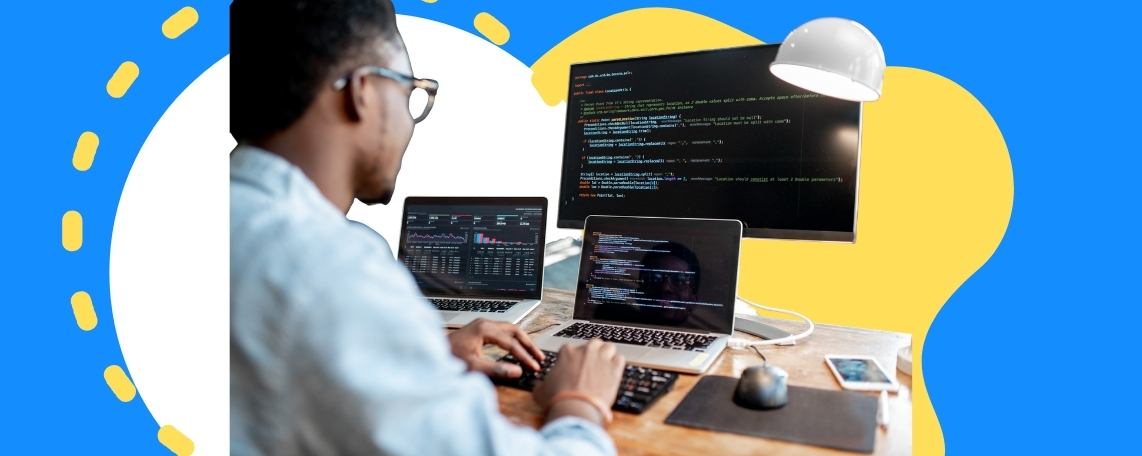
There's a skill quietly widening the gap between sales reps who consistently hit quota and everyone else. It's not negotiation. It's not cold calling. It's not even storytelling.
It's vibe coding — the ability to use AI to build products, demos, and tools without writing a single line of code.
Sounds unlikely for a sales role? Sure. But when you look at the data, it makes more sense than you'd expect.
What Is Vibe Coding And Why Isn't It Just a Developer Thing?
The term "vibe coding" was coined by AI researcher Andrej Karpathy in early 2025 and quickly became Collins Dictionary's Word of the Year. The core idea is deceptively simple: you describe what you want in plain language — English, Vietnamese, any language — and AI tools like Claude, ChatGPT, or Cursor write the code, design the interface, and build the product for you.
No JavaScript required. No database knowledge needed. You just need to know what you want.
This is no longer experimental. According to Second Talent's 2026 research, over 63% of current vibe coding users aren't developers — they're marketers, founders, consultants, and increasingly, sales reps. Gartner projects the low-code/AI development tools market will exceed $30 billion in 2026. The barrier between "having an idea" and "making it real" has essentially disappeared.
But here's what matters for sales: vibe coding doesn't turn reps into developers. It turns them into people who can demo an idea on the spot — and in B2B sales, that's an enormous advantage.
What Sales Already Has And How Vibe Coding Makes It Better
Let's look at the day-to-day reality of a B2B sales rep.
Most of their time goes to very specific tasks: researching prospects, running discovery calls, sending proposals, following up, updating the CRM, attending training. According to HubSpot, the average sales rep spends only about 33% of their time actually selling — the rest is admin, data entry, and preparing materials.
Now add vibe coding to the picture not as a new job, but as a supporting tool that makes what sales already does significantly more effective:
From static proposals to interactive demos.A 15-page PDF describing product features, no matter how well-written, still requires the buyer to imagine. But when a sales rep can spend 20–30 minutes using Claude to build a mock-up dashboard that mirrors the prospect's actual workflow — imagination becomes demonstration. According to benchmark data from Optifai (939 B2B companies, 2025), interactive demos convert at 38%, a 52% improvement over traditional screen-share demos at 25%.
From "I'll send that over later" to same-day delivery.The same research shows that deals where proposals are sent within 24 hours of the demo close 35% faster. Vibe coding collapses this gap no waiting for the design team, no waiting for presales to build a custom deck.
From "our product has feature X" to "here's how feature X solves your specific problem."76% of B2B buyers say they value personalized, value-adding outreach during their purchase journey. When a sales rep can show a prototype that reflects the prospect's actual business context, the conversation shifts from "listening to a pitch" to "discussing a solution." That's consultative selling at its highest level.
What the Numbers Say
Before going further, here are some data points worth sitting with:
According to Microsoft research (cited by Newly), the average ROI on AI coding tools is 3.5x, with top performers hitting 10.3x. The typical payback period is just 2–4 weeks when teams are properly enabled.
Salesforce's 2026 data shows 89% of revenue organizations now use AI, and teams using AI tools are 3.7x more likely to hit quota.
Meanwhile, according to Emblaze Revenue Summit (2025), proactive sellers generate 19–30% higher annual revenue than reactive ones. Vibe coding is fundamentally a form of proactive selling instead of waiting for the prospect to ask, you show them what's possible before they even think to request it.
And a particularly practical number: Optifai reports that 87% of Fortune 500 companies have adopted at least one vibe coding platform for internal tool development. This isn't hype — it's becoming a baseline for how businesses operate.
A Real Example: Showing Instead of Telling
In B2B, especially for large deals, customization isn't a "nice-to-have" it's table stakes. A manufacturing company and an IT services firm might both need a CRM, but the way they manage pipelines, measure deal health, and forecast revenue is completely different. If sales only has one generic demo for everyone, big deals are easily lost because the prospect can't see themselves in the product.
Vibe coding solves exactly this problem and more importantly, it helps scale the ability to customize.
At OplaCRM, instead of needing a presales team to build a separate demo for each industry (taking days, sometimes weeks), sales reps can spend 20–30 minutes using AI to create a prototype tailored to each prospect. Morning meeting with a manufacturing client — build a visual pipeline with stages from RFQ to Production Order. Afternoon call with a services company switch to a ticket management flow with SLA tracking and customer health scores. Same CRM platform, but each prospect sees their own problem being solved.
That prototype isn't a finished product — it's an interactive sketch, just enough for the prospect to visualize exactly how the product would work for them. Enough to shift the conversation from "what does a CRM do?" to "this CRM actually addresses my problem."
Behind the scenes, the product and engineering team is building the real thing with proper system architecture, security, scalability, and everything a production-ready product demands. The sales prototype shows the "what." The product team ensures the "how" meets the highest standards.
And here's what makes this approach truly powerful: insight from sales becomes high-quality input for product. When a sales rep understands a prospect deeply enough to build a prototype that matches their industry, workflow, and specific pain points — they're transmitting exactly what the customer needs, with zero layers of translation. The product team receives customer insight in its most visual, direct form, from the people who talk to the market every single day. The result is a product shaped by people with deep thinking in both the technical and market dimensions — not built in isolation and launched hoping the market responds.
Vibe Coding for Sales: A Skill, Not a Job Description
Here's an important distinction: vibe coding isn't the sales rep's main job. The main job is still selling running calls, building relationships, negotiating, closing deals. Vibe coding is a complementary skill, similar to how knowing Excel, reading financial statements, or using LinkedIn Sales Navigator were once "nice-to-have" skills that gradually became standard.
More specifically, vibe coding should be used at the right time, for the right deal:
Use it when you need an interactive demo for a high-stakes deal not for every lead in the pipeline. Use it when discovery insights are clear enough that a prototype adds real value not as a default for every call. Use it to differentiate in competitive deals — not as a replacement for a sales process that already works.
Think of it this way: a sales rep who can vibe code is like an architect who can sketch by hand. They don't need to build the house but the ability to quickly sketch a concept in front of a client creates a level of trust and connection that a PowerPoint deck simply can't match.
And that's the edge. In a market where 94% of B2B buying groups have already built a shortlist of vendors before first contacting sales, anything that helps you stand out and deliver value from the very first interaction is a real competitive advantage.
CRM: The Foundation That Makes Vibe Coding Meaningful
Vibe coding only works when the sales rep has enough context to know what to build. And that context comes from the CRM.
A good CRM isn't just a place to store names and phone numbers. It's where the sales rep sees the prospect's entire journey — from the first interaction, through every call, email, and piece of feedback, to where the deal currently sits in the pipeline. With that data, a sales rep can use AI to create a prototype that genuinely reflects the prospect's needs. Without it, they're building something generic and generic doesn't create differentiation.
This is also why data hygiene, keeping CRM data clean, complete, and current — matters more than ever. AI, whether it's an agent or a vibe coding tool, is only as smart as the data it's fed. Poor CRM data in means poor output out.
On the flip side, when CRM data is high-quality, everything connects: AI agents analyze patterns → sales reps use insights to create prototypes → prospect feedback flows back into the CRM → the system gets smarter over time. That's a compounding competitive advantage that's very hard for competitors to replicate.
Where to Start
In B2B, especially when you're selling across multiple industries, the biggest challenge isn't "do we have a good product?" — it's "can we show the product the right way for each industry?" Every vertical has different workflows, different KPIs, different pain points. And the larger the deal, the higher the expectation for customization.
This is where vibe coding creates real leverage. Not because it's new technology, but because it lets sales teams scale customization that previously could only be done manually, one deal at a time.
A practical approach:
Start with your most strategic vertical. Pick the industry where your team has the most large deals or is actively trying to expand. Use vibe coding to create a standard prototype set for that vertical, the right pipeline stages, relevant dashboards, industry-specific use cases. This becomes a "base template" that can be quickly refined for each individual prospect.
Expand to the next vertical. Once you have a manufacturing template, adapting it for services, distribution, or tech is much faster — the logic is already clear, you're just changing context. New sales reps can also learn from this pattern instead of starting from scratch.
Keep CRM data clean — this is the prerequisite. A prototype only has value when it reflects the prospect's reality. If the CRM is missing discovery notes, industry tags, or pain point details, even the best-looking prototype is just generic. Good data is the foundation that makes customization meaningful.
Measure impact by vertical. Compare deal velocity and close rates between deals with prototypes and those without, segmented by industry. You'll quickly see which verticals get the most impact from prototyping and that's where to invest next.
Final Thought
Vibe coding for sales isn't about turning every rep into a developer. It's about adding one more tool to the toolkit, a tool that fits this era, turning insight into action faster, more visually, and more personally than ever before.
In a B2B market where deal cycles are getting longer, buying committees are getting larger, and prospects are doing more research on their own before ever talking to sales, any skill that helps you create value from the very first moment deserves your attention.
Vibe coding is one of those skills. Interesting, practical, and increasingly, a genuine edge.
OplaCRM helps sales teams build the data foundation that everything else depends on — from Visual Funnel and Health Score to Competitor Intelligence — so every customer interaction has full context. Whether you use AI or not, quality data is always the starting point. Book a demo →


.png)
ISO CERTIFICATION


