Am I Cut Out for Sales? Navigating the Modern B2B Sales Spectrum
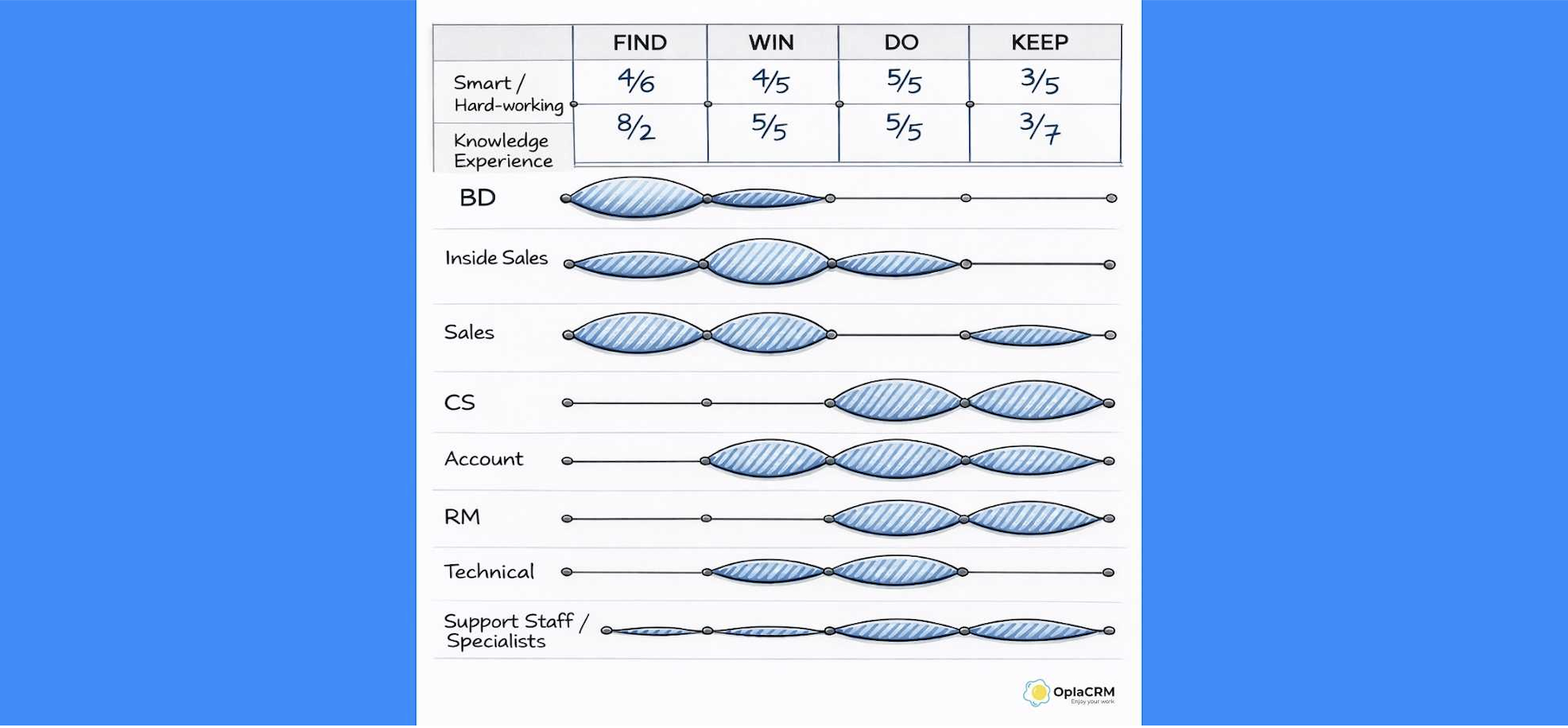
In the age of CRM, AI, and specialized B2B functions, the "perfect salesperson" doesn't exist. Instead, there is a perfect fit for your specific personality and skill set.
To find your place, let’s break down the profession into three dimensions: The Journey, The Personas, and The Competency Matrix.
To expand this into a more substantial piece for the OplaCRM blog, we’ll add a "Strategic Perspective" section and deepen the analysis of each role. This version positions Opla as a thought leader that understands the organizational complexity of modern B2B sales.
1. The Sales Lifecycle: Where do you want to live?
In the B2B world, the "sale" isn't a moment in time; it’s a marathon. At Opla, we view the customer journey through four distinct quadrants:
- FIND (Prospecting): The art of opening doors. This is about identifying pain points and reaching out to strangers.
- WIN (Closing): The art of persuasion. This involves demos, handling objections, negotiating contracts, and getting the "Yes."
- DO (Implementation): The art of delivery. Ensuring the product or service actually solves the problem you promised it would.
- KEEP (Retention): The art of loyalty. Nurturing the relationship, preventing churn, and identifying upsell opportunities.
The Question: Do you prefer the thrill of the chase (Find/Win) or the satisfaction of building something long-term (Do/Keep)?
2. The Personas: Decoding the Modern Sales Titles
In Vietnam and globally, sales titles are often confusing. Let’s standardize these roles based on the specialized functions we see in high-performing organizations:
The Hunter (Business Development - BDR/SDR)
They live in the FIND phase. Their day is spent on LinkedIn, email, and the phone. They are tech-savvy, resilient, and love the "game" of getting a meeting. They don't necessarily close the deal; they set the stage for success.
The Architect (Inside Sales)
Operating mostly from behind a screen, these pros handle inbound leads. Because the products are often standard or SaaS-based, they can guide a customer from "Hello" to "Signed" without ever leaving the office. They are masters of efficiency and digital communication.
The Captain (Account Executive - AE)
This is the classic B2B Sales role. They own the WIN. They are strategic orchestrators—bringing in technical teams, designers, or executives to help push a complex deal across the finish line.
The Guardian (Customer Success - CS)
In the world of SaaS (like OplaCRM), the sale doesn't end at the signature. CS focuses on KEEP. They are measured on "Renewal Rates." If you are empathetic, organized, and love problem-solving, this "Sales-adjacent" role is often where you will shine.
The Hybrid (Account Manager)
Common in agencies, the Account role is "3 heads and 6 arms." You pitch the strategy, win the client, and then manage the project. It is exhausting but incredibly rewarding for those who crave variety and high-impact results.
The Advisor (Relationship Manager - RM)
Common in banking and high-ticket consulting. An RM is a "Trusted Advisor." Their value lies in their deep knowledge of the client’s industry. While they have quotas, their approach is consultative rather than aggressive.
3. The Competency Matrix: Intelligence vs. Grit
At Opla, we’ve analyzed thousands of interactions to understand what makes a salesperson successful at each stage. We balance two scales: Grit (Effort) vs. IQ/EQ (Intelligence), and Knowledge vs. Experience.
Phase 1: FIND (60% Grit | 40% IQ)
Success here comes from volume and persistence. However, the modern "SDR" uses AI and tools to automate the "grunt work," allowing their 40% IQ to focus on personalization. This is the perfect entry point for hungry, hardworking talent.
Phase 2: WIN (40% Grit | 60% EQ)
When you are in the boardroom, "hard work" matters less than "heart work." You need High Emotional Intelligence (EQ) to read the room, understand unspoken hesitations, and build trust. Experience is the "secret sauce" that helps you navigate tough negotiations.
Phase 3: DO & KEEP (The Balance)
Implementation (DO) requires technical knowledge, while Retention (KEEP) requires long-term experience. "Senior" sales professionals often gravitate toward the KEEP phase because they have the "grey hair" and the patience that younger sales reps might lack. Trust isn't built in a day; it’s built over years.
Conclusion: Stop Asking "Am I Fit?" and Start Asking "Where Do I Belong?"
The "Wolf of Wall Street" era is over. Today’s B2B landscape is built on specialization. You might be a terrible "Hunter" but a world-class "Customer Success" manager. You might struggle with "Closing" but be a genius at "Relationship Management."
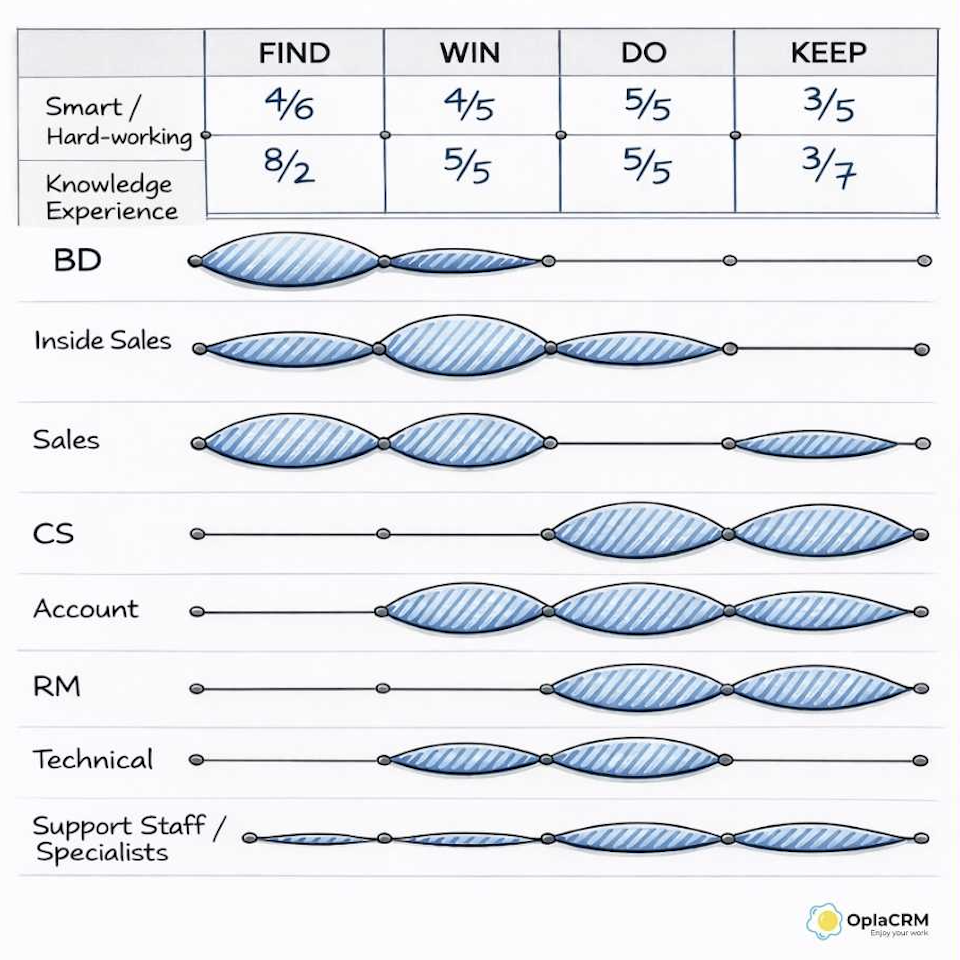
Before you give up on a career in sales, look at the map above. Find the quadrant that matches your natural energy. Whether you are an introvert who loves data or an extrovert who loves the stage, there is a seat for you at the B2B table.

.png)
ISO CERTIFICATION


